Shoulder Instability
Shoulder Instability Treatment in Fairfax and Arlington, VA
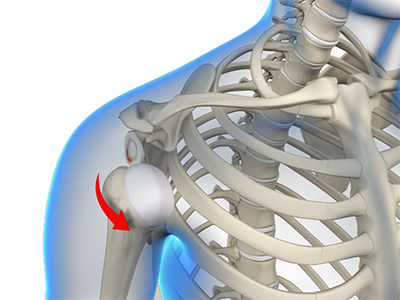
Shoulder instability occurs when the upper arm bone repeatedly slips partially or completely out of the shoulder socket, causing pain, weakness, and difficulty with everyday movements. It can develop after a traumatic injury, shoulder dislocation, or repetitive overhead activities, particularly in athletes. Dr. Robert Najarian, a board-certified orthopedic surgeon specializing in orthopedic sports medicine, evaluates and treats shoulder injuries in Fairfax and Arlington, Virginia. Treatment plans are tailored to the underlying cause of instability, the severity of the injury, and each patient's activity goals.
What is Shoulder Instability?
Shoulder instability is a chronic condition that causes frequent dislocation of the shoulder joint.
What are the Causes of Shoulder Instability?
A dislocation occurs when the end of the humerus (ball portion) partially or completely dislocates from the glenoid (socket portion) of the shoulder. A partial dislocation is referred to as a subluxation whereas a complete separation is referred to as a dislocation.
What are the Risk Factors of Shoulder Instability?
The risk factors that increase the chances of developing shoulder instability include:
- Injury or trauma to the shoulder
- Falling on an outstretched hand
- Repetitive overhead sports such as baseball, swimming, volleyball or weightlifting
- Loose shoulder ligaments or an enlarged capsule
Robert Najarian, M.D.
Dr. Najarian is board-certified in orthopedic surgery and sports medicine. With additional fellowship training in sports medicine and more than 18 years of experience, he specializes in treating the knee, shoulder, and elbow, as well as all sports-related injuries. His area of focus is in the treatment of knee cartilage and ligamentous injury, shoulder instability and rotator cuff repair, and elbow injuries in the throwing athlete (Tommy John Surgery). He has been named a Washingtonian Top Doctor since 2016.
What are the Symptoms of Shoulder Instability?
The common symptoms of shoulder instability include pain with certain movements of the shoulder, popping or grinding sound that may be heard or felt, swelling and bruising of the shoulder seen immediately following subluxation or dislocation.
Visible deformity and loss of function of the shoulder occur after subluxation or sensation changes such as numbness. Partial paralysis can occur below the dislocation because of pressure on nerves and blood vessels.
What are the Treatment Options for Shoulder Instability?
Conservative Treatments for Shoulder Instability
The goal of conservative treatment for shoulder instability is to restore stability, strength and a full range of motion. Conservative treatment measures may include the following:
- Closed reduction: Following a dislocation, your surgeon can often manipulate the shoulder joint, usually under anesthesia, realigning it into proper position. Surgery may be necessary to restore normal function depending on your condition.
- Medications: Over-the-counter pain medications and NSAIDs can help reduce the pain and swelling. Steroidal injections may also be administered to decrease swelling.
- Rest: Rest the injured shoulder and avoid activities that require overhead motion. A sling may be worn for 2 weeks to facilitate healing.
- Ice: Ice packs should be applied to the affected area for 20 minutes every hour.
Surgery for Shoulder Instability
When conservative treatment options fail to relieve shoulder instability, your surgeon may recommend shoulder stabilization surgery. Shoulder stabilization surgery is performed to improve the stability and function of the shoulder joint and prevent recurrent dislocations. It can be performed arthroscopically, depending on your condition, with much smaller incisions.
Arthroscopy is a surgical procedure in which an arthroscope, a small flexible tube with a light and video camera at the end, is inserted into a joint to evaluate and treat the condition. The benefits of arthroscopy compared to the alternative, open shoulder surgery, are smaller incisions, minimal soft tissue trauma, less pain leading to faster recovery.
Why Choose Dr. Najarian for Shoulder Instability in Fairfax and Arlington, VA?
- Board-Certified Orthopedic Expertise: Dr. Najarian is board-certified in Orthopedic Surgery and Orthopedic Sports Medicine, with experience evaluating and treating musculoskeletal injuries.
- Specialized Sports Medicine Training: His fellowship training at Cleveland Clinic Sports Health supports his approach to managing sports-related injuries and shoulder conditions.
- Personalized Treatment Plans: Treatment recommendations consider the frequency of dislocations, the extent of soft tissue or bone damage, activity levels, and response to nonsurgical treatment.
- Focus on Shoulder Stability and Function: Care aims to address the underlying cause of instability and help patients work toward improved shoulder control, strength, and mobility.
- Convenient Northern Virginia Locations: Patients can access orthopedic and sports medicine care at Inova Sports Medicine locations in Fairfax and Arlington.
Shoulder Instability FAQs
Shoulder instability can develop after a traumatic injury, a fall onto an outstretched arm, or a shoulder dislocation. Repetitive overhead movements during sports such as baseball, swimming, and volleyball may also contribute. Some individuals have naturally loose ligaments that make the shoulder more susceptible to instability.
Common symptoms include a sensation that the shoulder is slipping out of place, recurrent dislocations or partial dislocations, pain with certain movements, weakness, and reduced confidence when using the arm. Some people also experience clicking or a feeling that the shoulder may give way. An orthopedic evaluation can help determine the cause of these symptoms.
Yes. Depending on the severity and cause, treatment may include activity modification, physical therapy, exercises to strengthen the shoulder muscles, short-term sling use, and appropriate pain management. Surgery may be considered when instability continues despite nonsurgical treatment or when significant structural damage is present.
Shoulder stabilization surgery may be recommended for recurrent dislocations, persistent instability that limits daily activities or sports, or injuries involving the labrum, ligaments, or shoulder socket. The decision depends on the patient's age, activity level, injury pattern, and the extent of tissue or bone damage.
Shoulder stabilization surgery may be performed arthroscopically through small incisions using a camera and specialized instruments. Depending on the injury, the surgeon may repair the labrum, tighten stretched soft tissues, or use another technique to improve stability. Some patients require open surgery or a procedure to address bone loss.
Recovery depends on the procedure performed and the severity of the injury. Patients commonly wear a sling during the initial healing period and participate in a structured physical therapy program. Returning to sports or strenuous activities may take several months and should occur only when the treating surgeon determines it is appropriate.
Schedule a Shoulder Instability Consultation in Fairfax or Arlington, VA
Recurring shoulder dislocations, pain, or a feeling that your shoulder may slip out of place can interfere with work, exercise, and everyday activities. If shoulder instability is affecting your mobility or confidence in using your arm, Dr. Robert Najarian provides orthopedic and sports medicine care at Inova Sports Medicine in Fairfax and Arlington, Virginia. Schedule a consultation to discuss your symptoms, explore nonsurgical and surgical treatment options, and determine an appropriate plan to help restore shoulder stability and function.