
Shoulder Dislocation
What is Anatomy of the Shoulder?
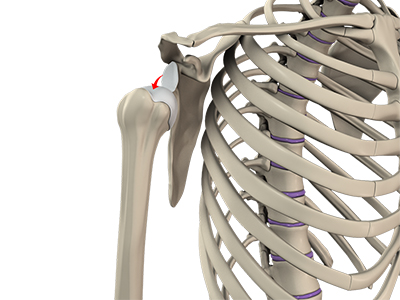
The shoulder joint is a ball and socket joint. A ball at the top of the upper arm bone (humerus) fits neatly into a socket, called the glenoid, which is part of the shoulder blade (scapula). The glenoid is surrounded by a ring of fibrous cartilage called the labrum for stabilization of the shoulder joint.
What is Shoulder Dislocation?
Sports that involve overhead movements and repeated use of the shoulder at your workplace may lead to sliding of the upper arm bone from the glenoid. The dislocation might be a partial dislocation (subluxation) or a complete dislocation causing pain and shoulder joint instability. The shoulder joint often dislocates in the forward direction (anterior instability), and sometimes in the backward or downward direction.
Robert Najarian, M.D.
Dr. Najarian is board-certified in orthopedic surgery and sports medicine. With additional fellowship training in sports medicine and more than 18 years of experience, he specializes in treating the knee, shoulder, and elbow, as well as all sports-related injuries. His area of focus is in the treatment of knee cartilage and ligamentous injury, shoulder instability and rotator cuff repair, and elbow injuries in the throwing athlete (Tommy John Surgery). He has been named a Washingtonian Top Doctor since 2016.
What are the Symptoms of Shoulder Dislocation?
The most common symptoms of shoulder dislocation include pain and shoulder joint instability. Other symptoms such as swelling, numbness and bruising may also occur. At times, it may cause tears in the ligaments or tendons of the shoulder and nerve damage.
How is Shoulder Dislocation Diagnosed?
Your doctor will examine your shoulder and may order an X-ray to confirm the diagnosis.
How is Shoulder Dislocation Treated?
The condition is treated by a process called closed reduction, which involves placing the ball of the upper arm back into the socket. Following this, the shoulder will be immobilized using a sling for several weeks. Ice may be applied over the area 3-4 times a day. Rehabilitation exercises may be started to restore range of motion, once the pain and swelling decrease.