Multiligament Knee Injuries
Multiligament Knee Injury Treatment in Fairfax and Arlington, VA
Multiligament knee injuries involve damage to two or more ligaments that stabilize the knee joint and can cause significant pain, swelling, instability, and difficulty bearing weight. These complex injuries may occur during sports, traumatic accidents, or other high-impact activities and sometimes involve damage to nearby nerves, blood vessels, or bones. Dr. Robert Najarian, a board-certified orthopedic surgeon specializing in orthopedic sports medicine, provides evaluation and treatment for knee injuries in Fairfax and Arlington, Virginia. Treatment plans are tailored to the injured ligaments, the severity of the damage, and each patient's functional and recovery goals.
What are Multiligament Knee Injuries?
Injury to more than one knee ligament is called a complex or multiligament knee injury and may occur during sports or other physical activities.
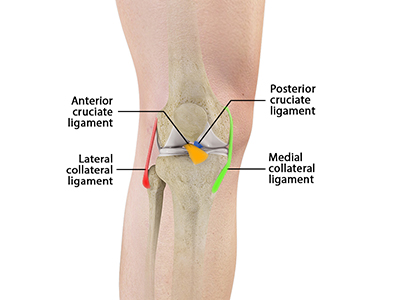
The knee joint is one of the largest and complex joints in your body. The joint is connected to your thigh bones and bones of the lower leg by various ligaments. The bones which meet to form your knee joint are the kneecap (patella), the thigh bone (femur) and shinbone (tibia).
The ligaments of the knee joint are:
- Anterior Cruciate Ligaments (ACL)
- Posterior Cruciate Ligaments (PCL)
- Medial Collateral Ligaments (MCL)
- Lateral Collateral Ligaments (LCL)
What are the Symptoms of Multiligament Knee Injuries?
The symptoms vary with the severity of the injury. They include:
- A loud popping sound occurring during injury
- Knee swelling
- A feeling of looseness in the knee joint
- Knee pain that may be sudden and severe
- Pain with weight bearing on the injured knee
Robert Najarian, M.D.
Dr. Najarian is board-certified in orthopedic surgery and sports medicine. With additional fellowship training in sports medicine and more than 18 years of experience, he specializes in treating the knee, shoulder, and elbow, as well as all sports-related injuries. His area of focus is in the treatment of knee cartilage and ligamentous injury, shoulder instability and rotator cuff repair, and elbow injuries in the throwing athlete (Tommy John Surgery). He has been named a Washingtonian Top Doctor since 2016.
What are the Types of Multiligament Knee Injuries?
Multiligament knee injuries may be mild or severe. Mild sprains do not damage the stability of the joint. A tear in the ligaments may be partial or complete. Partial tears cause loosening of the joint whereas, complete tearing of the ligament causes the joint to be unstable.
How are Multiligament Knee Injuries Diagnosed?
Your doctor physically examines the knee joint and its mobility. Your doctor may order an X-ray to rule out a fracture and an MRI to identify the injured ligaments.
What Happens If Multiligament Knee Injuries are Left Untreated?
Multiligament knee injuries need immediate treatment as they may result in disruption of blood supply to the knee. Some nerves may be damaged and if left untreated, severe cases may even require amputation.
How are Multiligament Knee Injuries Treated?
Your doctor will suggest various non-surgical methods to treat multiligament knee injuries. Surgery is an option if you do not respond to conservative treatment measures.
Non-Surgical Treatment
You may respond to non-surgical treatment and recover from the injury if the damage occurs to the collateral ligaments on the outside and inside of your knee.
- Icepacks may be used every 3-4 hours to reduce pain and swelling.
- Stabilize your knee joint with a compression bandage and wearing a brace.
- Your doctors may prescribe medications to reduce pain and swelling.
- Strengthening exercises are necessary to stabilize your joint. Your physiotherapist will plan the types of exercise based on the severity of your injury.
Surgical Treatment
Damaged cruciate ligaments will need surgery. Usually, reconstruction surgery is performed. A diagnostic arthroscopy is performed by your surgeon to view the injured parts. A graft tissue is used from your body or a donor to perform the reconstruction.
What Does Postoperative Rehabilitation for Multiligament Knee Injuries Involve?
Post-surgery rehabilitation involves the immobility of the joint for about 3 weeks. Partial weight bearing exercises may be started early with the weight gradually increased. A physiotherapist will plan your exercise strategy. Complete recovery and return to usual activities may take up to 9 months.
How Can Multiligament Knee Injuries Be Prevented?
Injuries to the knee are common in sports. The stability of the knee joint is completely dependent on the ligaments and the muscles. People involved in sports may prevent knee injuries by following these simple measures:
- Practice strengthening exercises to improve knee stability.
- Always maintain good flexibility of your legs with stretching exercises.
- Slowly increase the intensity of your workouts as excess stress may damage the knee ligaments.
Why Choose Dr. Najarian for Multiligament Knee Injuries in Fairfax and Arlington, VA?
- Board-Certified Orthopedic Expertise: Dr. Najarian is board-certified in Orthopedic Surgery and Orthopedic Sports Medicine, with expertise in evaluating and treating musculoskeletal injuries.
- Specialized Sports Medicine Training: His fellowship training at Cleveland Clinic Sports Health supports his approach to managing complex sports-related injuries and knee conditions.
- Comprehensive Injury Evaluation: Treatment planning considers the number of ligaments involved, knee stability, associated injuries, and the patient's overall health and activity level.
- Individualized Treatment Strategies: Depending on the injury, care may involve bracing, rehabilitation, or surgical reconstruction to help restore knee stability and function.
- Convenient Northern Virginia Locations: Patients can access orthopedic and sports medicine care at Inova Sports Medicine locations in Fairfax and Arlington.
Multiligament Knee Injuries FAQs
Multiligament knee injuries commonly result from high-impact sports, vehicle collisions, falls, or other traumatic events that place excessive force on the knee. These injuries may damage multiple stabilizing ligaments, including the anterior cruciate ligament (ACL), posterior cruciate ligament (PCL), medial collateral ligament (MCL), and lateral collateral ligament (LCL).
Symptoms may include sudden knee pain, rapid swelling, a popping sensation at the time of injury, instability, and difficulty standing or walking. Severe injuries may also affect nearby nerves or blood vessels. A knee injury accompanied by deformity, a cold or pale foot, numbness, or a weak or absent pulse requires immediate emergency evaluation.
Diagnosis typically involves a physical examination to assess knee stability, circulation, nerve function, and range of motion. X-rays may be used to identify fractures, while MRI scans can help determine which ligaments and other soft tissues are damaged. Because severe injuries can affect blood flow, urgent assessment of the leg's circulation may also be necessary.
Some injuries, particularly selected collateral ligament injuries, may be managed with bracing, activity modification, pain management, and physical therapy. However, injuries involving multiple ligaments or substantial knee instability may require surgery. Treatment depends on the specific ligaments involved, the severity of the damage, and associated injuries.
Surgery may involve repairing selected damaged structures or reconstructing torn ligaments using graft tissue from the patient or a donor. The surgeon determines the appropriate approach based on the injury pattern, associated damage, and overall condition of the knee. Some patients require staged procedures rather than having every ligament treated in one operation.
Recovery depends on the severity of the injury, the treatment performed, and individual healing. Rehabilitation may continue for several months, and returning to demanding sports or strenuous activities can take nine months or longer. A structured physical therapy program and clearance from the treating surgeon are important before resuming high-impact activities.
Schedule a Multiligament Knee Injury Consultation in Fairfax or Arlington, VA
A multiligament knee injury can significantly affect knee stability, mobility, and your ability to participate in everyday activities or sports. Dr. Robert Najarian provides orthopedic and sports medicine care at Inova Sports Medicine in Fairfax and Arlington, Virginia. Schedule a consultation to discuss your knee symptoms, understand your treatment options, and develop an individualized plan to support recovery and restore knee function. If you have a recent severe knee injury with a cold or numb foot, visible deformity, or signs of impaired circulation, seek emergency care immediately.