Knee Cartilage Restoration
Knee Cartilage Restoration in Fairfax and Arlington, VA
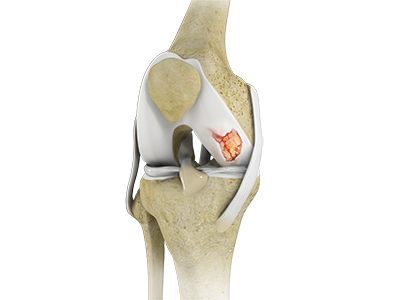
Knee cartilage damage can cause persistent pain, swelling, stiffness, and limited mobility, making everyday activities and sports more difficult. Knee cartilage restoration procedures aim to repair or replace damaged articular cartilage, reduce symptoms, and improve joint function in appropriately selected patients. Dr. Robert Najarian, MD, is a board-certified orthopedic surgeon specializing in Orthopedic Surgery and Orthopedic Sports Medicine who provides care for sports-related injuries and knee conditions in Fairfax and Arlington, Virginia. He evaluates each patient's symptoms, cartilage damage, activity level, and treatment goals to help determine an appropriate treatment approach.
What is Knee Cartilage Restoration?
Knee cartilage restoration is a surgical technique to repair damaged articular cartilage in the knee joint by stimulating new growth of cartilage or by transplanting cartilage into areas with defects in order to relieve pain and restore normal function to the knee.
Articular cartilage damage can occur from normal wear and tear of the knee joints, increasing age, injury, or other disease conditions. When cartilage is damaged, it can cause severe pain, inflammation, stiffness, and decreased range of motion of the knee. Because of its avascular nature (absence of blood supply), cartilage cannot repair itself and therefore surgical treatment is usually required to restore cartilage function and prevent progression of the damage into arthritis.
What is Articular Cartilage?
Articular cartilage is the smooth, shiny, white tissue covering the ends of bones that form a joint. Articular cartilage reduces friction when bones glide over each other, making the movements smooth and painless. It also acts as a shock-absorber to help prevent traumatic injuries to the bones.
What are the Indications for Knee Cartilage Restoration?
Knee cartilage restoration is indicated for patients with knee cartilage deterioration or damage as a result of:
- Repetitive use of the knee joint
- Trauma or injury
- Hormonal conditions, such as osteochondritis dissecans (OCD)
- Congenital deformities
Robert Najarian, M.D.
Dr. Najarian is board-certified in orthopedic surgery and sports medicine. With additional fellowship training in sports medicine and more than 18 years of experience, he specializes in treating the knee, shoulder, and elbow, as well as all sports-related injuries. His area of focus is in the treatment of knee cartilage and ligamentous injury, shoulder instability and rotator cuff repair, and elbow injuries in the throwing athlete (Tommy John Surgery). He has been named a Washingtonian Top Doctor since 2016.
What Does the Procedure for Knee Cartilage Restoration Involve?
Most cartilage restoration procedures can be performed arthroscopically, a minimally invasive surgery that involves making 3 small keyhole incisions around the knee joint using an arthroscope, a small flexible tube with a light and video camera at the end that enables your surgeon to view inside of the joints and perform surgery. In certain cases, open surgery may be required to access the affected area requiring longer incisions. Your surgeon will discuss the best surgical options for you based on your condition.
Usually, recovery from an arthroscopic procedure is much faster with minimal pain than a traditional, open surgery.
Some of the most common procedures for knee cartilage restoration include:
- Microfracture: In this method, numerous holes are created in the injured joint surface using a sharp tool. This procedure stimulates a healing response by creating a new blood supply which results in the growth of new cartilage.
- Drilling: In this method, a drilling instrument is used to create holes in the injured joint surface. Drilling holes creates blood supply and stimulates the growth of new cartilage. Although the method is similar to microfracture, it is less precise, and the heat produced during drilling may damage other tissues.
- Abrasion Arthroplasty: This procedure is similar to drilling, but a high-speed metal-like object is used to remove the damaged cartilage instead of drills or wires.
- Osteochondral Autograft Transplantation: Healthy cartilage tissue (graft) is taken from the bone that bears less weight and is transferred to the injured joint place. This method is used for smaller cartilage defects.
- Osteochondral Allograft Transplantation: A cartilage tissue (graft) is taken from a donor and transplanted to the site of the injury. Allograft technique is recommended if a larger part of the cartilage is damaged.
- Autologous Chondrocyte Implantation: In this method, a piece of healthy cartilage from another site is removed using an arthroscopic technique and is cultured in the laboratory. Cultured cells form a larger patch which is then implanted in the damaged part by open surgery.
What Does Postoperative Care for Knee Cartilage Restoration Involve?
In general, postoperative care and recovery after knee cartilage restoration involve the following:
- You will be transferred to the recovery area to be monitored until you are awake from the anesthesia.
- Your nurse will monitor your blood oxygen level and other vital signs as you recover.
- You will be placed on crutches for the first few weeks with instructions on restricted weight-bearing. You are encouraged to walk with assistance as frequently as possible to prevent blood clots.
- Use of a continuous passive motion machine (CPM) at home is advised during the first few weeks to aid in the constant movement of the joint under a controlled range of motion.
- You are advised to keep your leg elevated while resting to prevent swelling and pain.
- You will notice some pain and discomfort in the knee area. Medications will be provided for comfort.
- Physical therapy and range of motion exercises are advised to restore mobility and strengthen the joints and muscles.
- Anti-nausea medications will be prescribed as needed for discomfort associated with anesthesia.
- You should keep your surgical site clean and dry for at least 48 hours. Instructions on surgical site care and bathing will be provided.
- Refrain from smoking as it can negatively affect the healing process.
- Eating a healthy diet rich in vitamin D is strongly advised to promote healing and a faster recovery.
- Refrain from strenuous activities or lifting heavy objects for the first couple of months. Gradual increase in activities over a period of time is recommended.
- You will be able to return to your normal activities in a month or two; however, return to sports may take 4 to 6 months.
- A follow-up appointment will be scheduled to monitor your progress.
What are the Risks and Complications of Knee Cartilage Restoration?
Knee cartilage restoration is a relatively safe procedure; however, as with any surgery, there are risks and complications that could occur, such as:
- Post-operative bleeding
- Blood clots (deep vein thrombosis)
- Infection
- Stiffness of the joint
- Numbness around the incisions
- Injury to vessels, nerves, or healthy cartilage
- Allergic response
- Failure of the graft
- Loosening of the graft
Why Choose Dr. Najarian for Knee Cartilage Restoration in Fairfax and Arlington, VA?
- Specialized orthopedic expertise: Dr. Najarian is board-certified in Orthopedic Surgery and Orthopedic Sports Medicine, with experience treating sports-related injuries and knee conditions.
- Advanced training: He completed his orthopedic residency at Rutgers New Jersey Medical School and a sports health fellowship at Cleveland Clinic.
- Individualized treatment recommendations: Treatment planning considers the location and extent of cartilage damage, knee function, activity level, and overall joint health.
- Focus on mobility and function: Care is directed toward improving knee function and helping patients work toward their daily activity and sports-related goals.
- Convenient local care: Patients can access orthopedic sports medicine services in Fairfax and Arlington, Virginia.
Knee Cartilage Restoration FAQs
Knee cartilage restoration includes surgical procedures designed to repair or replace damaged articular cartilage, the smooth tissue that covers the ends of bones within the knee joint. Depending on the cartilage defect and the patient's needs, treatment may stimulate a healing response or use cartilage or bone-cartilage grafts to address the damaged area.
Patients with localized cartilage defects, persistent knee symptoms, and limited damage to the surrounding joint may be candidates for certain cartilage restoration procedures. Candidacy depends on factors such as the size and location of the defect, age, activity level, alignment, and whether arthritis is present. An orthopedic evaluation can help determine the most appropriate option.
Options may include microfracture, osteochondral autograft or allograft transplantation, and autologous chondrocyte implantation. Each technique is suited to different types and sizes of cartilage defects. The recommended procedure depends on the specific injury and the patient's overall knee health.
Recovery varies according to the procedure performed, the extent of cartilage damage, and individual healing. Some procedures require several weeks of restricted weight-bearing, followed by progressive rehabilitation. Returning to sports may take several months or longer, and the timeline should be guided by the surgeon and physical therapist.
Yes. Physical therapy often plays an important role in recovery. A tailored rehabilitation program helps restore range of motion, improve muscle strength, and gradually increase weight-bearing and functional activity while protecting the healing cartilage or graft.
Potential risks include infection, bleeding, blood clots, stiffness, persistent pain, damage to nearby structures, and failure or loosening of a graft. The likelihood of complications depends on the procedure and individual circumstances. Your surgeon can discuss the potential benefits and risks before treatment.
Schedule a Knee Cartilage Restoration Consultation in Fairfax or Arlington, VA
Cartilage damage can affect your comfort, mobility, and ability to stay active. If you are experiencing ongoing knee pain or have been diagnosed with a cartilage injury, Dr. Robert Najarian offers orthopedic sports medicine care in Fairfax and Arlington, Virginia. Schedule a consultation to discuss your symptoms, review available treatment options, and learn whether knee cartilage restoration may be appropriate for your condition and activity goals.