
ACL Reconstruction
ACL Reconstruction in Fairfax and Arlington, VA
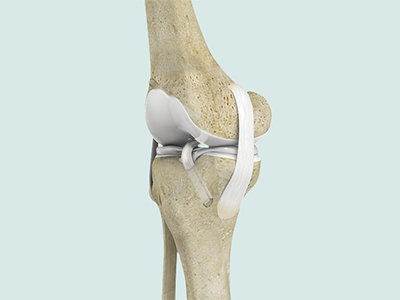
An anterior cruciate ligament (ACL) tear can cause knee pain, swelling, and instability that interfere with everyday activities and sports. ACL reconstruction is a surgical procedure that replaces the torn ligament with a tissue graft to help restore knee stability and function. Dr. Robert Najarian, MD, is a board-certified orthopedic surgeon specializing in orthopedic surgery and sports medicine who treats knee ligament injuries in Fairfax and Arlington, Virginia. He evaluates each patient's injury, activity level, and recovery goals to help determine whether ACL reconstruction is appropriate and develop an individualized treatment plan.
What is ACL Reconstruction?
Anterior cruciate ligament (ACL) reconstruction is a surgical procedure to replace a torn or damaged ACL ligament in your knee with a new ACL tissue graft obtained most commonly from your own body (autograft) or in rare cases from a deceased donor (allograft).
The most common autografts are the patellar tendon (tendon of the kneecap) or one of the hamstring tendons (tendons located at the back of the thigh). In some instances, the quadriceps tendon located above the kneecap is utilized. Tendons are cords of strong fibrous tissue that connect muscles to bones. Ligaments are tough bands of tissue that connect one bone to another bone.
ACL tears or injuries most often occur during sports activities that involve pivoting, cutting, and turning movements as in football, soccer, skiing, tennis, and basketball.
Robert Najarian, M.D.
Dr. Najarian is board-certified in orthopedic surgery and sports medicine. With additional fellowship training in sports medicine and more than 18 years of experience, he specializes in treating the knee, shoulder, and elbow, as well as all sports-related injuries. His area of focus is in the treatment of knee cartilage and ligamentous injury, shoulder instability and rotator cuff repair, and elbow injuries in the throwing athlete (Tommy John Surgery). He has been named a Washingtonian Top Doctor since 2016.
What is ACL?
The anterior cruciate ligament is one of the major stabilizing ligaments in the knee. It is a strong rope-like structure located in the center of the knee, running from the femur (thighbone) to the tibia (shinbone). The ACL is one of the four major ligaments of the knee that connects the femur to the tibia and helps stabilize your knee joint. It prevents excessive forward movement of the tibia in relation to the femur as well as limits rotational movements of the knee. When this ligament tears, unfortunately, it does not heal on its own and often leads to the feeling of instability in the knee, requiring reconstruction to correct the abnormality.
What are the Indications for ACL Reconstruction?
An ACL tear or injury is the main indication for ACL reconstruction surgery. An ACL injury is a sports-related injury that occurs when the knee is forcefully twisted or hyper-extended. An ACL tear usually occurs with an abrupt directional change with the foot fixed on the ground or when the deceleration force crosses the knee. Changing direction rapidly, stopping suddenly, slowing down suddenly while running, landing from a jump incorrectly, and direct contact or collision, such as a football tackle can also result in injury to the ACL.
What Does Procedure for ACL Reconstruction Involve?
ACL reconstruction surgery is usually performed under general anesthesia using a minimally invasive arthroscopic technique. In general, the procedure involves the following steps:
- Your surgeon will make two to three small cuts, about 1/4-inch-long, around your knee.
- An arthroscope is inserted into the knee joint through one of the incisions.
- An arthroscope is a thin tubular instrument with a camera, light, and a magnifying lens attached at the end that is connected to an external monitor and enables your surgeon to view the inside of the knee joint.
- Along with the arthroscope, a sterile solution is pumped into the joint to expand it, enabling your surgeon to have a clear view and space to work inside the joint.
- Miniature surgical instruments are passed through the other incisions and the torn ACL is removed and the pathway for the new ACL tendon graft is prepared.
- Your surgeon makes an incision over the knee or hamstring area and takes out a part of the patellar, hamstring, or quadriceps tendon to prepare the new ACL graft.
- Small holes are drilled into the upper and lower leg bones (femur and tibia) where these bones come together at the knee joint. The holes form tunnels in your bone to accept the new graft.
- The graft is pulled through the predrilled holes in the femur and tibia and fixed into the bones with screws or suture anchors.
- After confirming satisfactory reconstruction, the scope and the instruments are withdrawn, and the incisions are sutured and bandaged.
What Does Postoperative Care for ACL Reconstruction Involve?
In general, postoperative care instructions and recovery after ACL reconstruction surgery will involve the following:
- You will be transferred to the recovery area where your nurse will closely observe you for any allergic or anesthetic reactions and monitor your vital signs as you recover.
- You may notice pain, swelling, and discomfort in the knee area. Pain and anti-inflammatory medications are provided as needed to keep you comfortable.
- You are advised to keep your leg elevated while resting to prevent swelling and pain.
- You will be given assistive devices such as crutches with instructions on restricted weight-bearing for a specified period of time. You are encouraged to walk with assistance as frequently as possible to prevent blood clots.
- Instructions on surgical site care and bathing will be provided to keep the wound clean and dry.
- Refrain from strenuous activities for the first few months and lifting heavy weights for at least 6 months. A gradual increase in activities is recommended.
- An individualized physical therapy protocol will be designed to help strengthen the knee muscles and optimize knee function.
- You will be able to resume your normal daily activities in a couple of months, but with certain activity restrictions. Full recovery and return to sports usually take about 9 to 12 months.
- You may return to your work in about 6 weeks if your job is not too physically demanding. Those with physically demanding jobs will require a longer recovery period.
- A periodic follow-up appointment will be scheduled to monitor your progress.
What are the Risks and Complications of ACL Reconstruction?
ACL reconstruction surgery is a relatively safe procedure; however, as with any surgery, some risks and complications may occur, such as the following:
- Infection
- Bleeding
- Pain and weakness in the knee
- Adverse reactions to anesthesia
- Blood clot or deep vein thrombosis
- Damage to adjacent soft tissue structures
- Stiffness or decreased range of motion
- Re-rupture of the graft
- Non-healing of the ligament
Why Choose Dr. Najarian for ACL Reconstruction in Fairfax and Arlington, VA?
- Specialized orthopedic expertise: Dr. Najarian is board-certified in Orthopedic Surgery and Orthopedic Sports Medicine, with training in sports-related injuries and knee conditions.
- Advanced surgical training: He completed orthopedic residency training at Rutgers New Jersey Medical School and a sports health fellowship at Cleveland Clinic.
- Individualized treatment planning: Recommendations are based on the severity of the ACL injury, knee stability, activity level, and personal goals.
- Focus on restoring knee function: Treatment planning considers rehabilitation needs and the patient's goals for returning to daily activities, work, or sports.
- Convenient regional care: Patients can seek orthopedic sports medicine care in Fairfax and Arlington, VA.
ACL Reconstruction FAQs
ACL reconstruction may be recommended when a torn ACL causes persistent knee instability, particularly for people who participate in sports involving pivoting or sudden changes in direction. The decision depends on the extent of the injury, activity level, other knee damage, and response to nonsurgical treatment.
ACL reconstruction is generally performed using arthroscopic techniques through small incisions. The surgeon removes the damaged ligament, prepares a tissue graft, and secures it within tunnels in the thighbone and shinbone to help restore knee stability.
Grafts may come from the patient's own tissue, known as an autograft, or from donor tissue, known as an allograft. Common autograft options include the patellar tendon, hamstring tendon, and quadriceps tendon. The most appropriate option depends on factors such as age, activity level, and individual circumstances.
Recovery varies depending on the injury, surgical procedure, and progress with rehabilitation. Many patients return to routine daily activities within a few months, while returning to sports often takes around 9 to 12 months. Return to sports should be based on strength, knee stability, functional testing, and the surgeon's and physical therapist's recommendations.
Yes. Physical therapy is an essential part of recovery. A structured rehabilitation program helps reduce swelling, restore knee motion, rebuild strength, improve balance, and prepare the knee for daily activities and sports.
Potential complications include infection, bleeding, blood clots, knee stiffness, reduced range of motion, persistent pain or weakness, graft failure, and injury to nearby structures. Your surgeon can explain the risks associated with your specific circumstances and the steps taken to reduce them.
Schedule an ACL Reconstruction Consultation in Fairfax or Arlington, VA
A torn ACL can affect knee stability, mobility, and your ability to participate in the activities you enjoy. If you are experiencing knee instability or have sustained a sports-related knee injury, Dr. Robert Najarian provides orthopedic sports medicine care in Fairfax and Arlington, Virginia. Schedule a consultation to discuss your symptoms, understand your treatment options, and determine whether ACL reconstruction may be appropriate for your needs.