
UCL Reconstruction (Tommy John Surgery)
UCL Reconstruction (Tommy John Surgery) in Fairfax and Arlington, VA
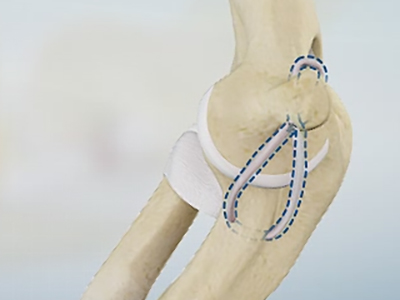
A ulnar collateral ligament (UCL) injury can cause inner elbow pain, instability, and reduced throwing performance, particularly in athletes who participate in baseball and other overhead sports. Dr. Robert Najarian, MD, is a board-certified orthopedic surgeon specializing in Orthopedic Surgery and Orthopedic Sports Medicine who treats sports-related injuries in Fairfax and Arlington, Virginia. He evaluates elbow injuries, activity demands, and recovery goals to help patients understand their treatment options and determine whether UCL reconstruction may be appropriate.
What is UCL Injury?
When this ligament is injured, it can end a professional athlete's career unless surgery is performed. The common symptoms associated with a UCL injury are as follows:
- Pain on the inner side of the elbow
- Unstable elbow joint
- Numbness in the little finger or ring finger
- Decreased performance in activities such as throwing baseballs or other objects
UCL reconstruction surgery involves replacing a torn ulnar collateral ligament with a tendon from elsewhere in the body. It is also referred to as Tommy John Surgery.
Robert Najarian, M.D.
Dr. Najarian is board-certified in orthopedic surgery and sports medicine. With additional fellowship training in sports medicine and more than 18 years of experience, he specializes in treating the knee, shoulder, and elbow, as well as all sports-related injuries. His area of focus is in the treatment of knee cartilage and ligamentous injury, shoulder instability and rotator cuff repair, and elbow injuries in the throwing athlete (Tommy John Surgery). He has been named a Washingtonian Top Doctor since 2016.
What is the Treatment for UCL Injuries?
Your physician will recommend conservative treatment options to treat the symptoms associated with UCL injury unless you are a professional or collegiate athlete. In these cases, if the patient wants to continue in their sport, surgical reconstruction is performed.
Conservative treatment options that are commonly recommended for non-athletes include the following:
- Activity restrictions
- Orthotics
- Ice compression
- Medications
- Physical therapy
- Pulsed ultrasound to increase blood flow to the injured ligament and promote healing
- Professional instruction
UCL Reconstruction
If conservative treatment options fail to resolve the condition and symptoms persist for 6-12 months, your surgeon may recommend ulnar collateral ligament reconstruction surgery. UCL reconstruction surgery repairs the UCL by reconstructing it with a tendon from the patient’s own body (autograft) or from a cadaver (allograft). The most frequently used tissue is the palmaris longus tendon in the forearm. The basic steps for UCL reconstruction surgery include the following:
- The surgery is performed in an operating room under regional or general anesthesia
- Your surgeon will make an incision over the medial epicondyle area
- Care is taken to move muscles, tendons, and nerves out of the way
- The donor's tendon is harvested from either the forearm or below the knee
- Your surgeon drills holes into the ulna and humerus bones
- The donor's tendon is then inserted through the drilled holes in a figure 8 pattern
- The tendon is attached to the bone surfaces with special sutures
- The incision is closed and covered with sterile dressings
- Finally, a splint is applied with the elbow flexed at 90 degrees.
What Does Postoperative Care for UCL Reconstruction Involve?
After surgery, your surgeon will give you guidelines to follow, depending on the type of repair performed and the surgeon's preference. Common postoperative guidelines include:
- Elevate your arm above heart level to reduce swelling
- Wear an immobilizing splint or cast for 1-3 weeks
- Apply ice packs to the surgical area to reduce swelling
- Keep the surgical incision clean and dry. Cover the area with plastic wrap when bathing or showering
- Physical therapy will be ordered for strengthening and stretching exercises after the removal of the splint or cast
- Professional athletes can expect a strenuous strengthening and range of motion rehabilitation program for 6-12 months before returning to their sport
- Eating a healthy diet and not smoking will promote healing
What are the Risks and Complications of UCL Reconstruction?
As with any major surgery, there are potential risks involved.
The majority of patients suffer from no complications following UCL Reconstruction surgery, however, complications can occur following elbow surgery and include:
- Infection
- Limited range of motion
- Nerve damage causing numbness, tingling, burning or loss of feeling in the hand and forearm area
- Cubital Tunnel Syndrome
- Elbow instability
Why Choose Dr. Najarian for UCL Reconstruction (Tommy John Surgery) in Fairfax and Arlington, VA?
- Orthopedic sports medicine expertise: Dr. Najarian is board-certified in Orthopedic Surgery and Orthopedic Sports Medicine, with specialized training in sports-related injuries.
- Advanced training: He completed his orthopedic residency at Rutgers New Jersey Medical School and a sports health fellowship at Cleveland Clinic.
- Individualized treatment planning: Recommendations consider the severity of the ligament injury, elbow stability, activity level, and goals for returning to work or sports.
- Rehabilitation-focused care: Recovery planning considers the importance of restoring elbow motion, strength, and stability before resuming demanding activities.
- Convenient local access: Patients can seek orthopedic sports medicine care in Fairfax and Arlington, Virginia.
UCL Reconstruction (Tommy John Surgery) FAQs
Tommy John surgery is another name for ulnar collateral ligament reconstruction. During the procedure, a surgeon replaces a damaged ligament on the inner side of the elbow with a tendon graft, usually taken from the patient's own body or, in selected cases, from a donor. The goal is to improve elbow stability when the injury warrants surgery.
UCL reconstruction may be considered for athletes and other active individuals who have a significant ligament injury, persistent elbow instability, or ongoing symptoms that prevent them from participating in desired activities. Surgery may be recommended when appropriate nonsurgical treatments do not provide sufficient relief or stability. Not every UCL injury requires surgery.
Some UCL injuries, particularly partial tears, may improve with nonsurgical treatment. Options can include activity modification, rest, physical therapy, and a gradual return-to-throwing program under professional guidance. The best approach depends on the severity of the injury, the individual's activity demands, and the response to treatment.
UCL reconstruction is performed under anesthesia. The surgeon uses a tendon graft to reconstruct the damaged ligament and secures it to the upper and lower arm bones using a technique suited to the patient's anatomy and injury. The arm is usually protected after surgery, followed by a structured rehabilitation program.
Recovery varies by individual and the demands of the activity. Rehabilitation typically progresses over several months, and athletes who throw competitively may need approximately 9 to 12 months or longer before returning to competition. Return to throwing and sports should occur gradually after the surgeon and rehabilitation team confirm adequate strength, motion, and stability.
Potential complications include infection, elbow stiffness, persistent instability, nerve irritation or injury, numbness or tingling, and failure of the graft. Recovery can also take longer than expected. Your surgeon can explain the potential benefits, risks, and expected rehabilitation timeline based on your specific injury.
Schedule a UCL Reconstruction Consultation in Fairfax or Arlington, VA
Elbow pain and instability can make throwing, training, and everyday activities challenging. If you have a UCL injury or persistent inner elbow pain, Dr. Robert Najarian provides orthopedic sports medicine care in Fairfax and Arlington, Virginia. Schedule a consultation to discuss your symptoms, review nonsurgical and surgical treatment options, and determine whether UCL reconstruction (Tommy John surgery) may be appropriate for your goals.