
Tennis Elbow Surgery
Tennis Elbow Treatment in Fairfax and Arlington, VA
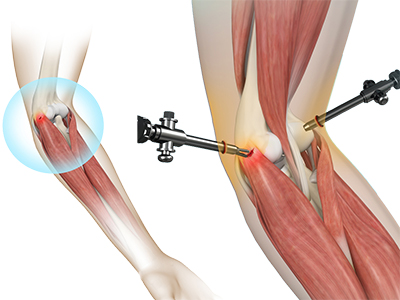
Tennis elbow, also known as lateral epicondylitis, is an overuse condition affecting the tendons on the outside of the elbow. It can cause pain when gripping objects, lifting items, extending the wrist, or performing repetitive arm movements. Dr. Robert Najarian, MD, is a board-certified orthopedic surgeon specializing in Orthopedic Surgery and Orthopedic Sports Medicine who evaluates sports-related injuries and musculoskeletal conditions in Fairfax and Arlington, Virginia. He helps patients explore appropriate treatment options based on their symptoms, activity levels, and functional goals.
What is Tennis Elbow?
Tennis elbow is a common name for the elbow condition lateral epicondylitis. It is an overuse injury that causes inflammation and microtears of the tendons that attach to the lateral epicondyle.
Tennis elbow is a painful condition occurring from repeated muscle contractions at the forearm. The condition is more common in sports activities such as tennis, painting, hammering, typing, gardening and playing musical instruments.
Tennis elbow and golfer’s elbow are similar, except that golfer’s elbow occurs on the inside of the elbow and tennis elbow occurs on the outside of the elbow. Both conditions are a type of tendonitis - inflammation of the tendons.
Robert Najarian, M.D.
Dr. Najarian is board-certified in orthopedic surgery and sports medicine. With additional fellowship training in sports medicine and more than 18 years of experience, he specializes in treating the knee, shoulder, and elbow, as well as all sports-related injuries. His area of focus is in the treatment of knee cartilage and ligamentous injury, shoulder instability and rotator cuff repair, and elbow injuries in the throwing athlete (Tommy John Surgery). He has been named a Washingtonian Top Doctor since 2016.
What Causes Tennis Elbow?
Tennis elbow is usually caused by overuse of the forearm muscles but may also be caused by direct trauma such as with a fall, car accident or work injury.
Tennis elbow is commonly seen in tennis players, hence the name, especially when poor technique is used while hitting the ball with a backhand stroke. Other common causes include any activity that requires repetitive motion of the forearm such as painting, hammering, typing, raking, weaving, gardening, lifting heavy objects and playing musical instruments.
What are the Signs and Symptoms of Tennis Elbow?
The signs and symptoms of tennis elbow can include the following:
- Elbow pain that gradually worsens
- Pain to the outside of the elbow that radiates to the forearm and wrist with grasping objects
- Weak grip
- Painful grip
- Pain that is exacerbated in the elbow when the wrist is bent back
How is Tennis Elbow Diagnosed?
Your doctor will evaluate tennis elbow by reviewing your medical history, performing a thorough physical examination and ordering X-rays, MRI or electromyogram (EMG) to detect any nerve compression.
What is the Treatment for Tennis Elbow?
Conservative Treatments for Tennis Elbow
Your physician will recommend conservative treatment options to treat the tennis elbow symptoms. These may include:
- Limit the use and rest the arm from activities that worsen symptoms.
- Splints or braces may be ordered to decrease stress on the injured tissues.
- Apply ice packs on the elbow to reduce swelling.
- Avoid activities that bring on the symptoms and increase stress on the tendons.
- Anti-inflammatory medications and/or steroid injections may be ordered to treat pain and swelling.
- Physical therapy may be ordered for strengthening and stretching exercises to the forearm once your symptoms have decreased.
- Pulsed ultrasound may be used to increase blood flow and promote healing to the injured tendons.
If conservative treatment options fail to resolve the condition and symptoms persist for 6 -12 months, your surgeon may recommend a surgical procedure called lateral epicondyle release surgery. Your surgeon will decide whether to perform your surgery in the traditional open manner (single large incision) or endoscopically (2 to 3 tiny incisions and the use of an endoscope – narrow lighted tube with a camera). Your surgeon will decide which option is best for you depending on your specific circumstances.
Your surgeon moves aside soft tissues to view the extensor tendon and its attachment on the lateral epicondyle and then trims or releases the tendon, and reattaches it to the bone. Any scar tissue present will be removed as well as any bone spurs. After the surgery is completed, the incision(s) are closed by suturing or by tape.
Following surgery, you are referred to physical therapy to improve the range of motion and strength of your joint.
Why Choose Dr. Najarian for Tennis Elbow in Fairfax and Arlington, VA?
- Orthopedic sports medicine expertise: Dr. Najarian is board-certified in Orthopedic Surgery and Orthopedic Sports Medicine, with specialized training in sports-related injuries.
- Advanced clinical training: He completed his orthopedic residency at Rutgers New Jersey Medical School and a sports health fellowship at Cleveland Clinic.
- Personalized treatment planning: Recommendations consider the severity of tendon symptoms, daily activity demands, and response to previous treatment.
- Focus on function and recovery: Treatment planning aims to improve elbow comfort, grip strength, and the ability to return to work, exercise, and recreational activities.
- Convenient regional care: Patients can access orthopedic sports medicine care in Fairfax and Arlington, Virginia.
Tennis Elbow FAQs
Tennis elbow typically develops from repetitive use of the forearm muscles and tendons that extend the wrist and fingers. Activities such as tennis, painting, gardening, typing, hammering, and repeated lifting can contribute to the condition. It can occur even in people who do not play tennis.
Common symptoms include pain or tenderness on the outside of the elbow, discomfort that extends into the forearm, a weakened grip, and pain when lifting or holding objects. Symptoms may worsen when extending the wrist or performing repetitive gripping movements.
Diagnosis usually involves reviewing your medical history, discussing activities that aggravate symptoms, and examining the elbow and forearm. Your clinician may assess tenderness, grip strength, and wrist movement. X-rays or other imaging tests may be recommended when necessary to investigate other possible causes of pain.
Most cases initially respond to nonsurgical treatment. Options may include modifying aggravating activities, ice, a counterforce brace or wrist splint, appropriate pain-relief medication, and physical therapy focused on stretching and strengthening the forearm muscles. Other treatments may be considered depending on the severity and duration of symptoms.
Surgery may be considered when symptoms remain persistent and limiting despite an appropriate course of nonsurgical treatment, often over several months. Procedures may involve removing damaged tendon tissue or releasing the affected tendon attachment. Your orthopedic surgeon can assess whether surgery is appropriate based on your symptoms, examination, and treatment history.
Recovery depends on the severity of the condition and the treatment used. Many patients improve gradually with nonsurgical care over several weeks or months. After surgery, recovery may take several months and can involve activity restrictions and physical therapy to restore movement and strength. Your return to work, exercise, or sports will depend on your progress.
Schedule a Tennis Elbow Consultation in Fairfax or Arlington, VA
Persistent elbow pain can make gripping, lifting, working, and participating in sports difficult. If you are experiencing symptoms of tennis elbow that interfere with your daily activities, Dr. Robert Najarian provides orthopedic sports medicine care in Fairfax and Arlington, Virginia. Schedule a consultation to discuss your symptoms, explore treatment options, and develop a care plan tailored to your needs and recovery goals.