
Elbow Injuries
What is Elbow Anatomy?
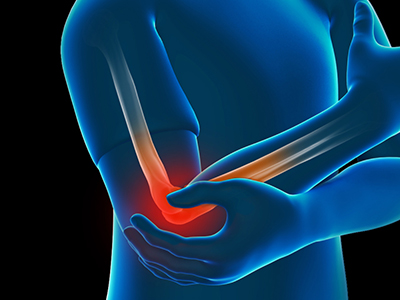
The elbow is a complex joint formed by the articulation of three bones - the humerus, radius, and ulna. Articular cartilage lines the articulating regions of the humerus, radius, and ulna. It is a thin, tough, flexible and slippery surface that acts as a shock absorber and cushion to reduce friction between the bones. The bones of the elbow are supported by ligaments, tendons, muscles, nerves and blood vessels.
The elbow joint helps in bending or straightening of the arm to 180 degrees and lifting or moving objects.
Robert Najarian, M.D.
Dr. Najarian is board-certified in orthopedic surgery and sports medicine. With additional fellowship training in sports medicine and more than 18 years of experience, he specializes in treating the knee, shoulder, and elbow, as well as all sports-related injuries. His area of focus is in the treatment of knee cartilage and ligamentous injury, shoulder instability and rotator cuff repair, and elbow injuries in the throwing athlete (Tommy John Surgery). He has been named a Washingtonian Top Doctor since 2016.
What are the Different Types of Elbow Injuries?
Some of the common elbow injuries include:
- Elbow fractures: Fracture is a common injury to the elbow. Elbow fractures may result from a fall onto an outstretched wrist, direct impact to the elbow or twisting injury. Elbow fractures may cause severe pain, swelling, tenderness, and painful movements. If a fracture is suspected, immediate intervention by your doctor is necessary. Surgery is often required if a bony displacement is observed.
- Tennis elbow/golfer's elbow: Tennis elbow is the inflammation of muscles on the outside of the elbow whereas tendinitis on the inner side of the elbow is golfer’s elbow. Overuse of the arms or a traumatic blow to the hand may cause tennis elbow or golfer’s elbow. These injuries may cause severe pain and tenderness of the affected muscles that radiate down into the forearm, particularly with the use of the hand and wrist.
- Adequate rest and immobility of the affected part help the muscles to recover and modification of the activities helps in better healing. A tennis elbow strap may relieve the pressure from the muscle attachment. Pain medications may be recommended to relieve pain and inflammation. Heat therapy, followed by stretching and strengthening exercises and then ice massage may be beneficial.
- Tendonitis: Tendonitis is inflammation of any of the tendons in the wrist. It is usually treated with adequate rest, splinting, ice application and non-steroidal anti-inflammatory medicines to reduce the inflammation.
Any problem causing pain, swelling, discoloration, numbness or a tingling sensation, or abnormal position of the elbow that persists for more than two or three days should be evaluated by your doctor to establish the cause and obtain the best treatment as early as possible.