
Distal Biceps Repair
Distal Biceps Repair in Fairfax and Arlington, VA
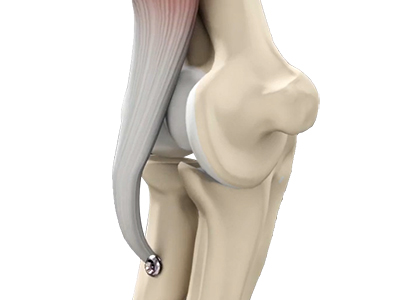
A distal biceps tendon tear occurs when the tendon connecting the biceps muscle to the forearm bone near the elbow becomes partially or completely detached. This injury can cause sudden pain, bruising, swelling, and weakness when bending the elbow or rotating the forearm. Dr. Robert Najarian, MD, is a board-certified orthopedic surgeon specializing in Orthopedic Surgery and Orthopedic Sports Medicine who evaluates musculoskeletal and sports-related injuries in Fairfax and Arlington, Virginia. He assesses the severity of the injury and each patient's functional needs to help determine an appropriate treatment plan.
What is Distal Biceps Repair?
The biceps is a large muscle located in the front of your upper arm and runs from the shoulder to the elbow joint. It is attached to the bones of the shoulder and elbow by tendons. The distal biceps is the area where the biceps is attached to the forearm bone in the elbow.
Distal biceps repair is a surgical procedure to restore a ruptured or torn distal biceps and tendon, caused by an injury.
What are the Indications for Distal Biceps Repair?
The typical indications for distal biceps repair include:
- “Pop” or tear felt in the front of the elbow
- Severe pain around the crease of the elbow
- Bruising and swelling around the front of the elbow
- Weakness in bending of the elbow or twisting the forearm
- Warmth in the elbow and cramping in the arm
- Substantial pain and weakness of the entire upper extremity (shoulder to hand)
Robert Najarian, M.D.
Dr. Najarian is board-certified in orthopedic surgery and sports medicine. With additional fellowship training in sports medicine and more than 18 years of experience, he specializes in treating the knee, shoulder, and elbow, as well as all sports-related injuries. His area of focus is in the treatment of knee cartilage and ligamentous injury, shoulder instability and rotator cuff repair, and elbow injuries in the throwing athlete (Tommy John Surgery). He has been named a Washingtonian Top Doctor since 2016.
How is the Distal Biceps Repaired?
The distal biceps is usually repaired through a single incision (front of the elbow) or a double incision (front and back of the elbow) technique.
During the procedure:
- You will be administered general anesthesia.
- A small incision is made at the elbow, and the torn or ruptured end of the biceps located.
- Any damaged tissues are removed using specialized instruments.
- Small holes are then drilled into your forearm bone (radius bone).
- A tiny metal implant known as an anchor is pressed into the forearm bone.
- Strong threads (sutures) are inserted into the distal biceps tendon.
- The sutures are attached to the anchor and the biceps is pulled back.
- The biceps is reattached and fixed to the forearm bone with strong anchoring stitches.
- The incision is closed with stitches and a dressing is applied.
- Your elbow is protected with the use of a brace and a sling.
More serious injuries may need a graft (transplanted tissue) to repair the distal biceps.
What are the Complications of Distal Biceps Repair?
Complications are generally rare and temporary. The most common complication is irritation or injury to the sensory nerves of the elbow or the forearm.
Other potential complications are:
- Numbness, tingling or weakness in the forearm
- Pain and/or stiffness in the elbow and arm
- A blood clot caused by anesthesia or surgery
- The need for additional surgery due to:
- Infection or bleeding into the elbow joint
- Re-rupture of the repaired distal biceps and tendon
What Does Postoperative Care for Distal Biceps Repair Involve?
As you recover, the surgeon will instruct you to:
- Wear an immobilizing device on your elbow or arm for 4 to 6 weeks
- Keep the surgery site dry to decrease the chance of infection
- Protect the repair by restricting your activities for at least 3 months
- Avoid heavy lifting and vigorous activity for several months
What are the Benefits of Distal Biceps Repair?
Distal biceps repair can help you to:
- Regain strength and a full range of motion
- Restore normal function of the elbow
- Return to normal activities
Why Choose Dr. Najarian for Distal Biceps Repair in Fairfax and Arlington, VA?
- Orthopedic expertise: Dr. Najarian is board-certified in Orthopedic Surgery and Orthopedic Sports Medicine, with specialized training in sports-related injuries.
- Advanced surgical training: He completed his orthopedic residency at Rutgers New Jersey Medical School and a sports health fellowship at Cleveland Clinic.
- Individualized treatment planning: Recommendations consider the extent of the tendon tear, arm strength, activity demands, and recovery goals.
- Focus on restoring function: Treatment planning considers elbow movement, forearm rotation, and strength needed for work, daily activities, and sports.
- Convenient regional care: Patients can access orthopedic sports medicine care in Fairfax and Arlington, Virginia.
Distal Biceps Repair FAQs
Symptoms may include a sudden popping sensation near the front of the elbow, pain, bruising, swelling, and weakness when bending the elbow or turning the palm upward. Some people notice a change in the shape of the biceps muscle. Sudden elbow pain with significant weakness should be evaluated promptly.
Not every tear requires surgery. Treatment depends on whether the tendon is partially or completely torn, the degree of weakness, the patient's activity level, and overall health. Nonsurgical treatment may be appropriate for some partial tears or people who can manage the resulting limitations. Surgery is often considered for complete tears when restoring strength and function is important.
The surgeon accesses the torn tendon through one or more incisions near the elbow, prepares the tendon and bone, and reattaches the tendon to the radius using fixation devices such as sutures or anchors. In some cases, a tendon graft may be needed, particularly for more complex or chronic injuries.
Recovery varies according to the severity of the tear, the repair technique, and individual healing. The elbow is usually protected with a brace or sling initially, and lifting restrictions are maintained while the tendon heals. Rehabilitation progresses gradually over several months, and returning to heavy lifting or strenuous sports may take four to six months or longer.
Potential complications include nerve irritation or injury, numbness or tingling in the forearm, elbow stiffness, persistent weakness, infection, blood clots, and re-tearing of the tendon. Your surgeon can explain the risks associated with your injury and the measures used to support healing.
Many patients regain substantial elbow and forearm function following surgery and rehabilitation, although outcomes vary. Recovery depends on factors such as the timing of treatment, the extent of the injury, tendon healing, and adherence to rehabilitation instructions. Your surgeon and physical therapist will guide your progression toward lifting and other demanding activities.
Schedule a Distal Biceps Repair Consultation in Fairfax or Arlington, VA
A distal biceps tendon injury can affect your ability to lift, bend your elbow, and rotate your forearm comfortably. If you have experienced sudden pain, bruising, or weakness near the front of your elbow, Dr. Robert Najarian provides orthopedic sports medicine care in Fairfax and Arlington, Virginia. Schedule a consultation to discuss your injury, review treatment options, and determine whether distal biceps repair may help restore arm strength and function.